Trace Elements 1971 Curated by Rosalind Davis
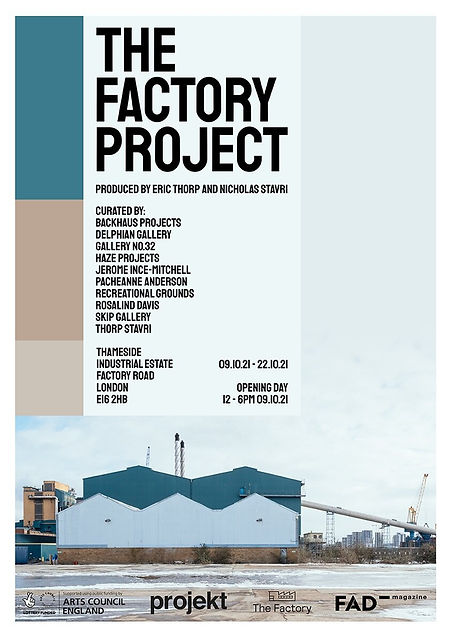
Reunited! Jamal Sterrett & Ben Lancaster performance at Trace Elements |1971. Curated by Rosalind Davis The Factory Project was Produced by Thorp Stavri In 2020/21 Rosalind Davis and Justin Hibbs had the the opportunity to work with the talented movement artist Jamal Sterrett as a commission for ITV Creates to create an ident (something you see between adverts and programmes). Jamal will rejoin Rosalind and Justin on a new collaboration at Trace Elements |1971 at the Factory, a major sculpture show in East London during Frieze week and create a new piece together as Jamal responds to a new site specifc sculptural installation.
Rosalind Davis Curatorial Statement for Trace Elements | 1971.
Themes that bring these artists’ practices together are transformation and experience. Their works respond directly to buildings or contexts, scraping back layers of history, materiality or indeed reality, to create new or alternate spaces, objects and environments.
Trace Elements | 1971 is a title that references this incredible building’s links back to the industrial era whilst also acknowledging the cumulative impact of subsequent phases of its history.
Tate and Lyle’s factory in Silvertown was created in 1878 during the late-Victorian era. This is a period where houses were filled with the ‘lived’ history of their inhabitants. Inherited objects and furniture acknowledged and valued layered histories and the passage of time. In the 20th century as Modernism emerged, the presiding sentiment was to cast aside ornament in favour of transcendent minimal spaces; to remove and erase the past to start afresh. However, we have since moved beyond these polarities, traces of the past are resilient and perhaps we need to recognise the power of both? We now sit somewhere in-between these two positions: treasuring objects, buildings and experiences that acknowledge both past and present while simultaneously creating new memories and spaces.
On one of our site visits to The Factory, Justin was wearing a t-shirt emblazoned with a 1971 logo – his birth year – and we discussed its potential as an enigmatic title. On researching further, I realised there was much more to the year 1971 than we initially thought.
1971 marked the beginning of the digital era with the advent of the first commercially available microprocessor and the beginning of the end of the Industrial Age. As such, 1971 was the start of home computing and all that came with it: freedom of information, self-education and the huge impact on our lives of the internet age.
While a lot of the works in my curated section are focused on the transformation of real-world materials and spaces, they also employ digital processes within their research and development stages – whether using photography, digital imaging software etc. For this collection of artists, the prevalence of the digital/virtual has led to a return to the physical and the haptic. They also share a sense of the industrial in the materials they use, factory components such as glass, latex, steel, di-bond, wood and concrete.
1971 was also the year that Disneyland opened. Disney created amazing visual effects through hand-drawn, frame-by-frameanimation. A half century later, animated films are created almost entirely throughdigital processes. We can all animate on our phones. This fact is magical and Disneyland was the birthplace of that magic – theatre, illusion, metamorphosis, and otherworldly experience which all play a part in the creation of these artists’ works.
An interesting aside – my grandfather and mother worked for Tate and Lyle where the Silvertown Exhibition takes place. So far as any place could contain spiritual trace elements, personal and familial, three generations of my family will now have worked in this factory, making and organising things, which is an interesting resonance / coincidence. I also created a painting of the factory some years ago, which adds to the feeling that it is pertinent to be curating at this site.
So, from 1878 to 1971 and now 2021. An intriguing set of dates – a resounding and rich collision of histories and contexts, which, through this exhibition will be activated again through our ideas, materials, and artworks. In 2021, through Thorp Stavri’s invitation, we bring this industrial building to life again as it begins another era.